

https://globalwitness.org/en/campaigns/land-and-environmental-defenders/...
by Joan Carling, Executive Director, Indigenous Peoples’ Rights International
As an Indigenous activist from the Philippines, I’ve seen networks of solidarity hold strong against deadly threats – safeguarding the lands, waters and cultures that so many depend upon.
In the 1980s, I lived for several months with tribal communities resisting the Chico River Dam in the Philippine highlands. Backed by the World Bank, the project threatened to flood ancestral territories and displace 100,000 Kalinga and Bontoc people.
Their courage in the face of militarisation, mass arrests and the assassination of Kalinga leader Macli-ing Dulag profoundly shaped my understanding of what it means to be Indigenous.
The government – whose soldiers riddled Macli-ing's home with bullets – accused protesters of opposing development.
They failed to understand that, for Indigenous Peoples, land is life. Any threat to our lands, territories and resources is a threat to our very existence – our cultures, our identities, our dignity and our future generations. That is why our communities were willing to risk everything to protect them.
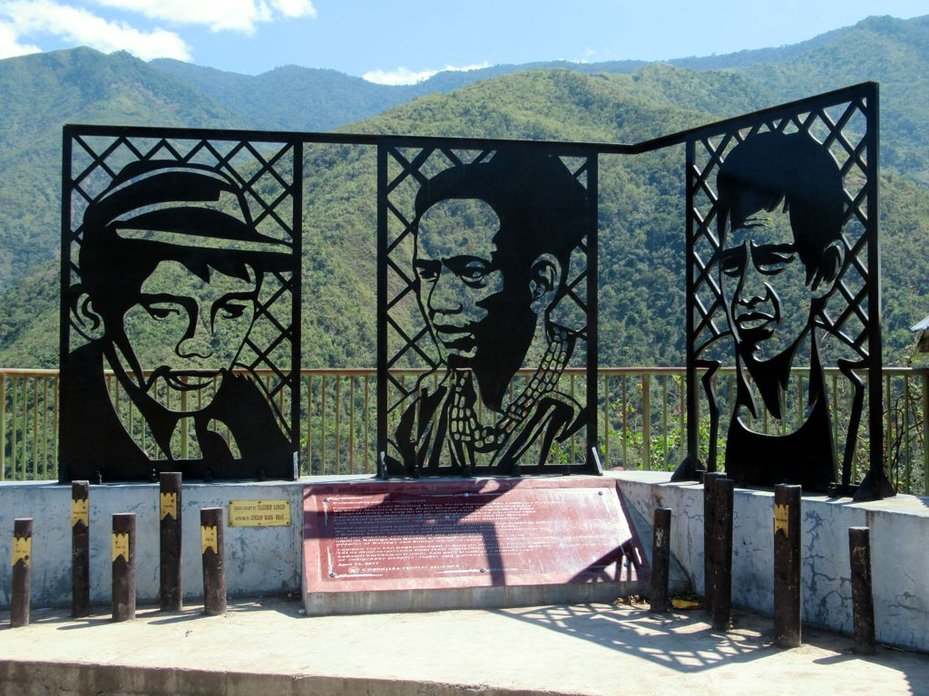
A monument in Kalinga District, the Philippines, erected in tribute to three leaders of the Chico Dam Resistance: Macli-ing Dulag (centre), Pedro Dungoc (left) and Lumbaya Aliga Gayudan (right). David Stanley
The same language is still being used to stigmatise land and environmental defenders today. In the Philippines and around the world, companies and state authorities label Indigenous Peoples as obstructionists who stand in the way of progress.
This is a narrative rooted in racism: a colonial dismissal of Indigenous knowledge and practice that is based on living in harmony with nature.
In today’s world, that ancestral knowledge is vindicated every day. From sustainable agriculture to climate-resilient water management, Indigenous Peoples’ customs offer effective climate solutions.
But the climate crisis is testing our capacity to adapt to the natural world. It is too drastic, too vast in scale. Rather than try to respond to this emergency on our own, we want to contribute to collective global efforts.
Instead of being listened to, however, Indigenous Peoples are being excluded from major decision-making spaces. As a result, the very projects touted as solutions – renewable energy, transition minerals – drive land grabs, dispossession and violence. We call this “green colonialism.”
If we resist attempts to steal our land and resources, we are criminalised, disappeared or killed. In 2025, at least 124 defenders were killed just for standing up to protect their homes, according to Global Witness.
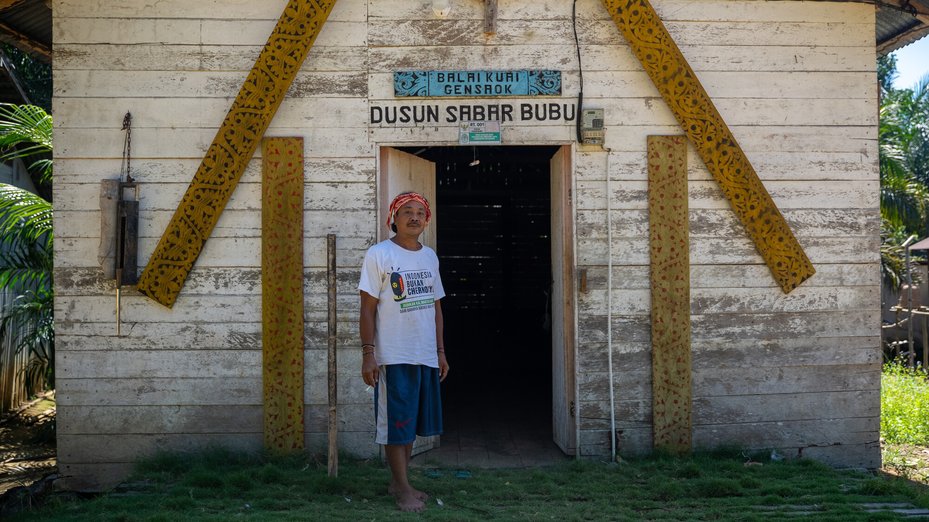
Fransiskus Sima, an Indigenous Dayak farmer, was part of peaceful demonstrations to defend the Sabar Bubu hill in Indonesia, following the destruction of the forest by corporate land clearance. Adi Renaldi / Global Witness
Take the resistance of Dayak communities in Indonesia. Corporate clearances were destroying community farmland and customary forest, while also fuelling the loss of carbon-rich peatlands and orangutan habitat. Ritual sites – central to Dayak spiritual life – were trashed. Local Dayak leaders organised to resist this damage, imposing customary sanctions on the company responsible.
But instead of being supported in their efforts to protect these climate-critical ecosystems, they were criminalised. A community leader was charged with extortion for using traditional practices to hold a company accountable for its reckless environmental destruction.
If we resist attempts to steal our land and resources, we are criminalised or killed
We see similar tactics in the Philippines, one of the deadliest places on the planet to defend the environment. My former organisation, the Cordillera Peoples Alliance – which grew out of the resistance to the Chico Dam – had bank accounts frozen after four of its leaders were classified as terrorists.
Other threats are more severe. In the Philippines, 12 defenders were killed in 2025. Global Witness linked five of those killings to the armed forces, showing how, when attempts to criminalise defenders fail, the military reverts to more direct attacks.
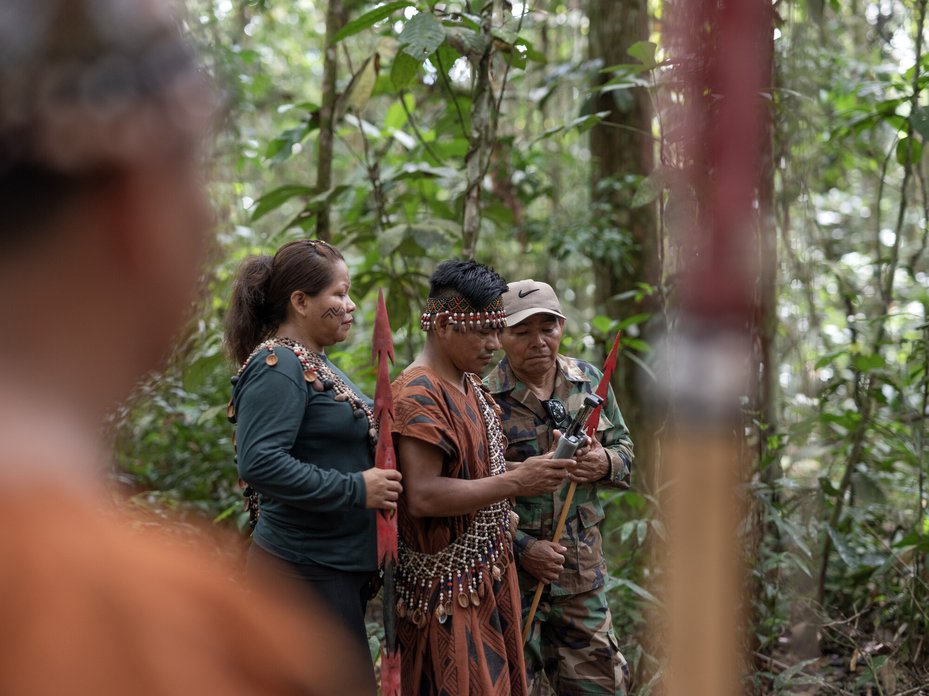
The Kakataibo Indigenous Guards patrol their community's forests in Peru as a collective protection measure against threats like illegal coca cultivation. Leslie Searles / Global Witness
Facing an indifferent or hostile state, Indigenous communities do what we’ve always done. We self-organise to protect ourselves, our homes, our forests, our mountains, rivers and territories.
This is the case in the Peruvian Amazon, where dozens of Indigenous leaders have been killed as criminal groups seek to establish themselves on their territories.
In response, Amazonian Peoples, such as the Kakataibo and Shipibo, have developed their own Indigenous guards. These monitor and patrol their land, challenge illicit actors, respond to threats and coordinate outreach to state institutions.
Around the world, Indigenous Peoples have had to establish such systems to protect themselves. Leaders no longer travel on their own. Safe houses and vehicles are put in place to provide refuge or streamline escape when threats escalate. Alliances are built with lawyers and doctors, who can respond in the event of legal or physical attacks.
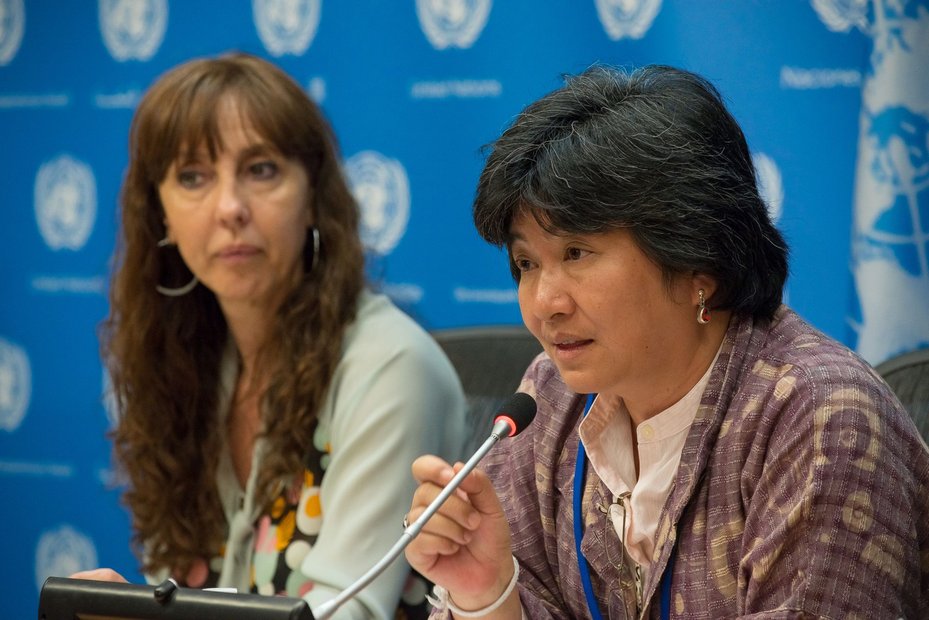
Joan Carling (right) speaks at a United Nations press conference in 2023, calling for the Sustainable Development Goals framework to centre Indigenous Peoples. Albin Lohr-Jones / Pacific Press / LightRocket via Getty Images
Support is needed from mental health specialists, too. I know this myself. While I was chair of the Cordillera Peoples Alliance, two brilliant Indigenous colleagues were killed – Alyce Omengan Claver and Rafael Markus Bangit.
As threats circulated, I was forced to live in the office temporarily to avoid travelling back and forth to my home. I fell into a serious depression after this, although it took me some time to realise it.
Tragically, during 2025, another 44 Indigenous people, including seven Indigenous Guards, were killed for defending their land, their culture and their resources. From Edgar Tumiñá Gembuel (a Nasa Guard from Colombia) to Nickasio Tayas Mindo (a Teduray leader from the Philippines), here we honour their legacy.
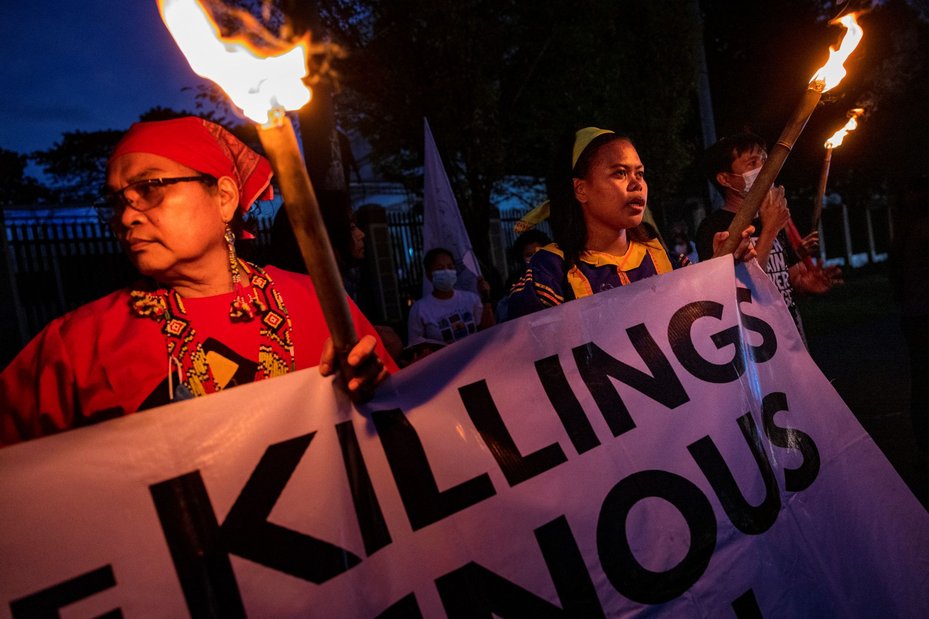
Activists commemorate murdered Indigenous people and environmental defenders in Quezon City, Metro Manila, the Philippines. Ezra Acayan / Getty Images
Despite the stress and danger, defenders have made progress. The Chico Dam resistance spurred the World Bank to develop its policy on Indigenous Peoples. The UNFCCC has established the Local Communities and Indigenous Peoples’ Platform to integrate Indigenous practices into global climate action.
The problem is that these tools are kept away in a corner. They don’t feed into other processes, such as multinational discussions on just transition pathways or climate adaptation.
This is the opposite of what is needed. Indigenous Peoples and our knowledge must be at the heart of climate decision-making. Our role as custodians of land, our understanding of the consequences of climate breakdown, and our collective resistance to dispossession must have an influence on policy at the centre of power.
But this can only happen when our territories are secure and our people protected from harm. States and leaders must work with us firstly to ensure that our communities are safe – and then to tackle the environmental crises that pose an existential threat to us all.
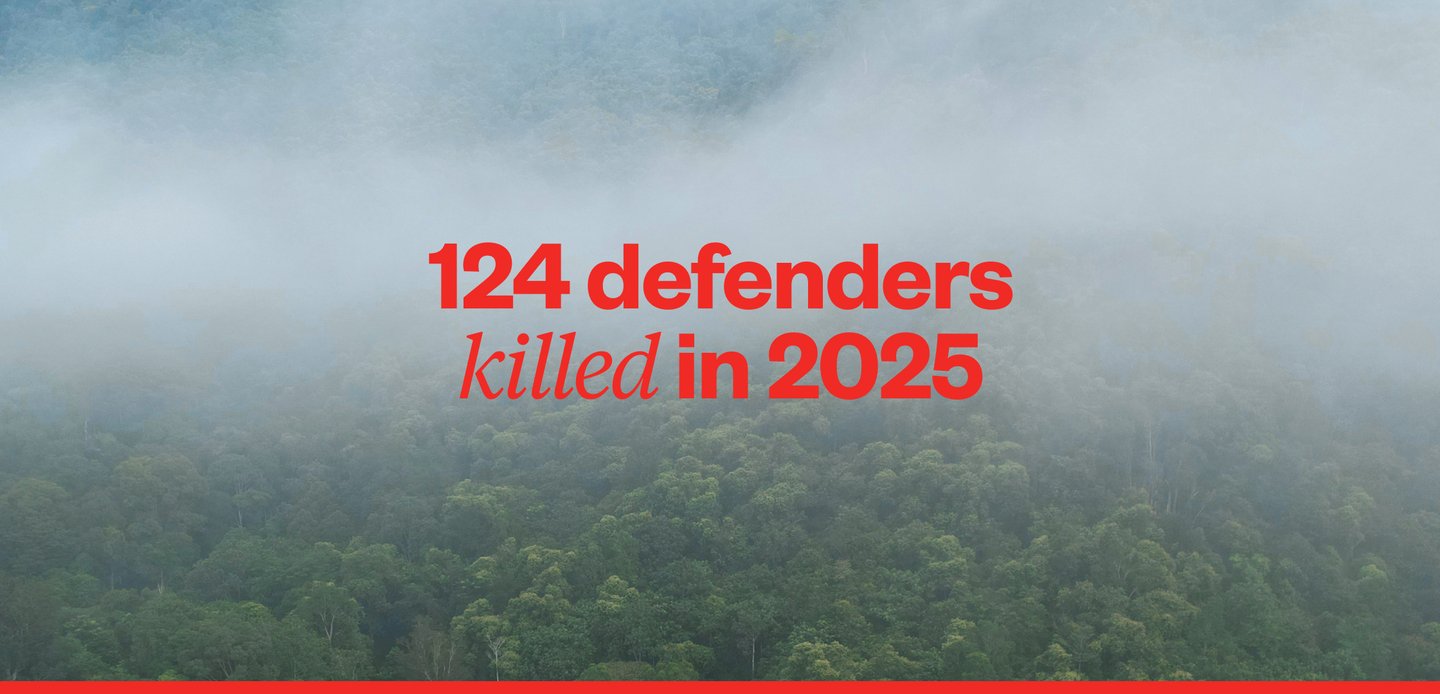
View of the Sabar Bubu hill covered in morning fog in Ketapang Regency, West Kalimantan, Indonesia. For generations, the Dayak Indigenous community has designated the hill as a sacred site and protected it. Adi Renaldi / Global Witness
Global findings
At least 124 land and environmental defenders were killed in 2025 for standing up to protect their lands and livelihoods from destruction.
This figure brings the total number of killings and disappearances documented by Global Witness since we began this work in 2012 to 2,375.
Every one of these deaths represents an attempt, in the most brutal fashion, to impose a chilling effect on movements that resist environmental and human right abuses. We remember the families, friends and communities who have been left devastated by each attack.
As well as recording the names of the defenders who have been killed and disappeared, our data helps to uncover the underlying causes of the violence. Identifying these trends and challenging the drivers that shape them is vital so that defenders can demand their rights to land and a clean environment without risking their lives.
Analysis
We verified the killings of 124 land and environmental defenders in 2025. This represents a decrease from 2024, when we documented 142 killings and four disappearances. This was itself a decline from 2023, when we registered 196 killings.
At first glance, this could indicate a positive downward trend. But the reality is that these figures are likely a significant underestimate, as many cases go unreported.
This is typical of situations involving serious armed conflict and genocide, where generalised insecurity and mass killings make identifying and verifying individual cases difficult.
Research is also challenging in repressive contexts where victims and civil society groups face reprisals for reporting and documenting abuses. This is especially the case in Africa and Asia, but increasingly in Latin America, too.
Of the 15 countries where we documented killings, 10 were categorised as repressed by civic freedom tracker CIVICUS Monitor. Nicaragua was classified as closed, the most repressive category in CIVICUS’s taxonomy – reflecting the challenges of accessing data in places controlled by heavily repressive regimes.