

https://www.stopkillerrobots.org/news/nothing-less-than-negotiations/
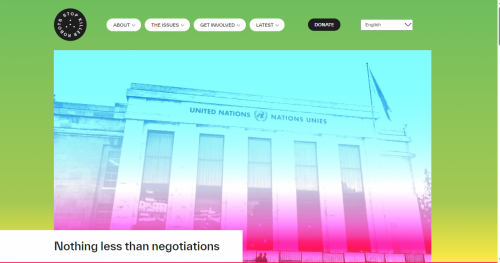
From 31 August to 4 September in Geneva, states met to discuss autonomous weapons within the Group of Governmental Experts (GGE) under the Convention on Certain Conventional Weapons (CCW) – the multilateral forum currently addressing autonomy in weapons systems. This was the last chance for states to develop the text that could form the basis of negotiations on an autonomous weapons treaty, when they decide on their next steps at the CCW Review Conference in November.
The meeting followed just days after the UN Secretary-General and President of the International Committee of the Red Cross issued a renewed call for states to “show political courage and move beyond incremental discussions towards decisive action,” on a regulatory framework for autonomous weapons. They urged states to urgently negotiate a legally binding instrument that establishes strict prohibitions and restrictions and warned that “a failure to act quickly and decisively will cost lives”.
The risks posed by autonomous weapons have only intensified over the past three years of discussions at the GGE where the development and deployment of increasingly autonomous systems has raced ahead in the absence of any specific regulations. A majority of states at the GGE recognize these urgent risks, and the need to move towards negotiations of an instrument that addresses them. On the first day of the meeting, Algeria, on behalf of the African Group of states, and Brazil, on behalf of a group of 47 states, delivered joint statements confirming their willingness to move ahead to negotiations based on the set of elements the GGE has been developing by consensus over the course of its mandate. In a statement from the floor, Stop Killer Robots noted the significant progress and areas of convergence reflected in the draft report of the group, notably on a working characterisation of autonomous weapons and the core measures that are needed to ensure meaningful human control over these systems and uphold international law. Stop Killer Robots commended the efforts of the Chair, Ambassador Robert in den Bosch of the Netherlands, to retain and reflect this progress as a starting point for negotiations, while noting that crucial issues currently missing from the text, such as a prohibition on anti-personnel autonomous weapons systems, must be addressed when negotiations commence.
As the meeting progressed, however, it became clear that the minority of states that oppose legally binding rules would go to great lengths to weaken these elements. While the GGE’s mandate only provided five days of formal sessions, High Contracting Parties also undertook a great deal of work in informal mode during the lunch and evening hours of the week, where observers, including international and regional organisations, academia, and civil society, were excluded from attending. This exclusion reflects a worrying trend in multilateral forums over recent years where substantive discussions take place behind closed doors and the meaningful participation of observers is increasingly eroded.
In the formal sessions, a small number of militarised states (who are also heavily invested in these systems) stated their opposition to several paragraphs of text – reopening concepts that in some cases had been painstakingly debated, revised, and generally accepted for a number of years. A revised version of the draft report of the group was presented on 3 September with significant elements deleted, including on ethical considerations and concepts of reliability, predictability, traceability, and explainability. Militarised states fought hard for these deletions, now unwilling to agree on certain elements that had previously achieved broad support from the majority of states in the room.
High Contracting Parties ultimately adopted a final report in the early hours of Saturday morning, but it has yet to be published at the time of writing. The final report encouragingly still contains a workable characterisation of autonomous weapons systems, recognition of the need for human judgement and control, core measures to enact that control, as well as affirming that responsibility cannot be transferred to machines. These measures should provide protection against autonomous weapon systems undermining existing international humanitarian law (IHL). It is disappointing that other elements proposing specific prohibitions and restrictions on autonomous weapons, beyond existing IHL principles and requirements, were not stronger – and we will continue to work for these requirements to be recognised and addressed in other forums. Nevertheless, any remaining areas of disagreement around these elements must be addressed within the context of negotiations, which cannot be stalled any longer.
As states look to decide on their next steps at the CCW Review Conference in November, this set of elements still remains a sufficient starting point for negotiations on a legal instrument on autonomous weapons in armed conflict.
The global context of increasing autonomy in weapons systems, and the harm already arising from unrestricted development, testing and use, demands urgent action. If the CCW does not agree in November, to start negotiating a legal instrument, then those that wish to keep meaningful human control over the use of force, and to prevent the automation of killing, must start negotiations through a forum that can actually take action. States should not allow the international humanitarian and legal landscape to be held hostage by the very states that are promoting these weapons. States, international organisations, civil society and the wider public must do this to protect people, to defend key principles of international law, and to lay down collective red lines against a dehumanised and dangerous future. We must make clear what the international community and responsible actors cannot accept in an increasingly automated world.
The decisions made by states at the CCW are not abstract – they are not merely technical or legal debates: these discussions have real consequences for the lives of people living through war. States at the CCW bear a great deal of responsibility at this critical moment. Nothing less than negotiations will suffice.